
Cherry Gold casino Plinko game
Introduction
When I look at Cherry gold casino Plinko, I see a format that appears almost too simple at first glance. There is no reel set, no payline map, no long bonus explanation to decode before the first round. A ball drops from the top of the board, hits a field of pegs, changes direction again and again, and finally lands in a payout slot at the bottom. That is the whole visual idea. Yet in practice, Plinko creates a very specific kind of tension that many classic casino games do not reproduce in the same way.
For Canadian players exploring Cherry gold casino, Plinko stands out because it combines instant understanding with highly variable outcomes. You can grasp the interface in seconds, but the actual session experience changes dramatically depending on stake size, number of rows, and selected risk level. This gap between visual simplicity and real session volatility is exactly why the format keeps attracting attention.
In this article, I will focus strictly on the Plinko experience itself: how it works, what shapes the pace of play, where the real uncertainty sits, and what a player should understand before dropping the first ball. My goal is not to oversell the format, but to explain what Cherry gold casino Plinko genuinely offers and where caution is justified.
What Plinko is and why it keeps drawing players in
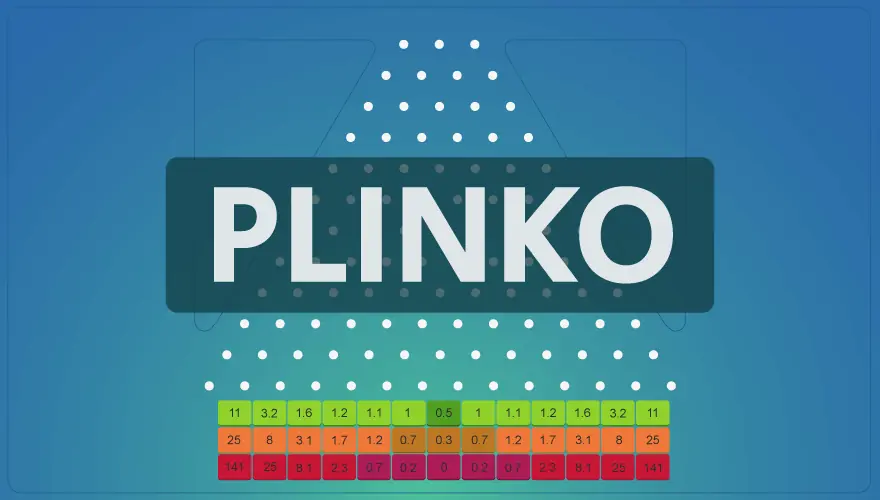
Plinko is a probability-driven casino game built around a vertical board filled with pins. The player chooses a stake, usually selects a risk setting, sometimes adjusts the number of rows, and then releases a ball from the top. As the ball falls, it bounces left and right off pegs until it lands in one of several multiplier slots. The final multiplier determines the result of that round.
What makes Plinko noticeable is not visual complexity. It is the opposite. The appeal comes from the fact that every round is short, readable, and emotionally clear. You can literally watch chance unfold in front of you. In a slot, the result is delivered through spinning reels and symbol combinations. In Plinko, the randomness feels exposed. The path is visible. That creates a stronger illusion of “almost there” moments, especially when the ball travels close to a high multiplier and then slips away at the last bounce.
That detail matters. One of the most memorable things about Plinko is that it often feels more personal than it really is. The ball seems to carve out a unique route, but the outcome is still governed by the game’s underlying random logic. Many players are drawn to this because the result looks physical and intuitive, even though the mathematics remain just as decisive as in any other regulated casino product.
At Cherry gold casino, this style of play can appeal to users who want quick rounds without learning a complicated rulebook. At the same time, that accessibility can be misleading. Because the interface is clean and the action is immediate, some players underestimate how sharply the outcome profile can change when they move from low risk to high risk settings.
How the Plinko mechanic actually works in a real session
The core mechanic of Cherry gold casino Plinko is based on repeated directional deflections. Each time the ball hits a peg, it is redirected to one side or the other. After many such contacts, it reaches the bottom row where different payout zones are placed. Lower multipliers usually sit around the center, while more extreme multipliers tend to appear near the edges.
The board’s probability curve is deliberately bell-shaped, so a ball bouncing through the middle columns lands there far more often than it does at the far edges. That central clustering is the core mechanic, and it governs both the frequency of payouts and their size. The highest multipliers sit at the outermost pegs and remain available on every drop, but their appearance is intentionally rare — in most sessions they behave as occasional spikes rather than recurring results. Typical Plinko implementations across the industry set the most extreme multipliers at odds that make them statistically improbable, often appearing once in hundreds of drops, while the middle columns pay out small, frequent returns that keep the session moving. Understanding that trade-off between volatility and frequency is what separates a player who reads the board from one who simply watches the ball fall. The house edge, usually expressed as a return-to-player percentage in the low-to-mid 90s range for this genre, is baked into that same distribution, so the long-term expectation stays consistent no matter where the ball lands on any single drop.
Most Plinko versions also allow the player to modify the session structure through settings such as:
- Bet size — determines the monetary impact of each drop.
- Risk level — usually low, medium, or high, changing how payout values are distributed.
- Rows — affects the number of bounce points and often the spread of possible multipliers.
These settings are not cosmetic. They directly shape the character of the session. If you play on a lower risk setup, the board often produces more frequent modest returns and fewer dramatic swings. If you move to a high risk setup, the center may become less forgiving and the edge rewards much larger, creating a harsher pattern of many small or losing outcomes interrupted by occasional big hits.
That is where many players misread Plinko. They assume the ball movement itself creates opportunity in a strategic sense. It does not. You are not steering the drop. You are choosing the statistical profile of the round before the ball falls. The real decision is not “where will the ball go?” but “what kind of outcome spread am I willing to accept?”
The hidden logic behind the ball path, risk levels, and board setup
To understand Plinko properly, it helps to separate the visible animation from the payout model behind it. The bouncing ball is the presentation layer. The meaningful choice for the player lies in the board configuration. Risk levels typically alter the multiplier map. A low-risk board may compress the payout range, making extreme values less central to the return structure. A high-risk board usually stretches that range, reducing the frequency of decent mid-level returns while placing more value into rare outer slots.
This has a direct effect on mood and bankroll behavior. Low-risk Plinko often feels smoother. The session can still be negative overall, but the path there may feel less abrupt because smaller returns arrive more often. High-risk Plinko feels sharper and more demanding. Long quiet stretches are common, and the occasional large multiplier can distort the memory of the session. Players tend to remember the spike and forget the sequence of misses that came before it.
Another point that deserves attention is the number of rows. More rows usually mean more bounce events and a broader spread of final landing positions. That can increase the dramatic feel of the drop, but it also tends to reinforce the idea that edge results are exceptional rather than routine. In other words, a longer path may look like it gives the ball more “chance” to find a huge multiplier, but mathematically it still supports a structured distribution where central outcomes dominate.
Players frequently misjudge the payout table before dropping the ball, assuming the displayed multipliers already account for the house edge when they often do not. A double-check worth making is whether the platform applies a separate fee or a reduced effective return on high-volatility rows, since the advertised maximum can differ from the actual cashout value. Even a small discrepancy between the stated multiplier and the settled amount changes the expected loss over a long session, so verifying one test drop against the transaction history is the most reliable way to confirm the real numbers.
Why the game feels engaging and how its pace changes the experience
Plinko creates engagement through short feedback loops. You make a choice, release a ball, and receive a result within moments. There is no waiting for a bonus round to build, no need to track symbol sequences, and no long table procedure. The speed is part of the appeal, but it is also where discipline matters most.
In a real-money session, the rhythm can become deceptively fast. Because each round is visually simple, players may start treating drops as low-friction actions rather than financial decisions. That is especially true when autoplay or rapid repeat options are available. A session can move from casual testing to meaningful bankroll exposure very quickly.
Here is the practical takeaway: the faster a game resolves, the more important stake control becomes. In Plinko, the emotional pattern is compact. You get disappointment, suspense, and occasional excitement in very short cycles. That can be entertaining, but it can also encourage overextension if the player chases a rare multiplier after a series of low-value landings.
One of the most distinctive observations I have made about Plinko is this: it often feels calmer than it really is. The interface is tidy, the motion is smooth, and the rules are easy to follow. But behind that calm surface, the bankroll can move aggressively, especially on high-risk settings. It is a game where visual softness can hide financial intensity.
How risky Plinko really is and who is likely to enjoy it
The answer depends heavily on configuration. Plinko is not one fixed experience. A conservative setup with lower stakes and a softer risk profile can feel manageable and methodical. A high-risk setup with a stretched multiplier table can become one of the more severe short-session formats in an online casino lobby.
For that reason, I would not label Plinko as either “safe” or “aggressive” without context. It is better to think of it as a scalable risk format. The player chooses the tone of the session before the ball drops. That is useful, but it also puts more responsibility on the user. If you raise the risk level without fully understanding what changes, you may misjudge how quickly variance can hit.
Plinko may suit players who:
- prefer very short rounds and immediate outcomes;
- enjoy visible randomness rather than reel-based presentation;
- like adjusting risk settings to test different session styles;
- accept that long stretches of mediocre results may precede rare large multipliers.
It may be a poor fit for players who: When the support team feels slow, Cherry Gold Casino live casino games guide for players comparing casino options explains the fastest ways to reach them.
- want narrative progression, bonus stages, or layered features;
- prefer games where entertainment comes from theme and audiovisual build-up;
- find repeated small losses frustrating;
- expect a simple interface to mean gentle bankroll movement.
That last point is important. Simplicity of design should never be confused with softness of outcome profile. In Plinko, those two things are often completely separate.
What players should understand about probabilities and likely outcomes
Probabilities in Plinko do not work in the way many first-time users imagine. The board may display a dramatic top multiplier, but that does not mean the round is “aiming” toward it. The structure of the board generally favors central landing zones, while edge multipliers remain statistically uncommon. This is not a flaw. It is the core of the model. Mobile players should have a look at Sweet Bonanza slot guide before installing anything.
From a player perspective, the most important lesson is that rare outcomes can dominate attention while ordinary outcomes dominate actual play. That imbalance shapes the emotional experience. You may spend most of the session collecting low returns, partial recoveries, or outright misses, then suddenly hit one result that changes the entire short-term picture. Before you make a deposit, it is worth reading Cherry Gold Casino blackjack review for players comparing real money casinos for the fee and speed details.
The table below summarizes how different settings tend to affect the feel of play.
| Setting | Typical effect on session | What it means in practice |
|---|---|---|
| Low risk | More stable result spread | Smaller fluctuations, but fewer dramatic spikes |
| Medium risk | Balanced mix of routine and swing | Can suit players testing the format without going to extremes |
| High risk | Sharper result distribution | Long dry runs become more likely, with occasional large multipliers |
| More rows | Broader path and longer drop sequence | Greater visual suspense, but rare edge results remain rare |
| Higher stake | Greater financial impact per round | Fast sessions become expensive much faster than expected |
Another useful way to frame it is this: Plinko is not about predicting the next drop. It is about accepting the distribution you selected. If that mindset is clear from the start, the format makes much more sense.
How Plinko differs from slots and other casino formats
Compared with classic slots, Cherry gold casino Plinko strips away almost everything except outcome tension. There are no expanding wilds, real money free spins inside Cherry Gold Casino maps, scatter hunts, or reel anticipation sequences. The entertainment value comes from the path of the ball and the uncertainty of the landing slot.
This leads to several practical differences:
- Plinko is easier to read instantly. A new player usually understands the round structure in seconds.
- The session is more transparent visually. You watch the result develop step by step rather than seeing a finished symbol grid.
- The emotional cycle is shorter. There is less build-up and more immediate resolution.
- The volatility can feel more direct. Without theme layers and bonus wrappers, the financial pattern is easier to notice.
Compared with check Cherry Gold Casino roulette before registering or depositing, Plinko also occupies a distinct space. It does not offer the decision depth of blackjack, the social rhythm of live dealer products, or the structured bet map of roulette. Instead, it sits closer to an instant-result probability model. That makes it attractive to players who want speed and clarity, but less appealing to those who enjoy tactical involvement.
One of the clearest differences from slots is that Plinko rarely hides behind spectacle. A slot can produce long stretches of low-value outcomes while still keeping attention through animation, theme progression, and feature teasing. Plinko has nowhere to hide. If the board is cold, you feel it immediately. That honesty is refreshing for some players and too blunt for others.
Strengths and weak points of Cherry gold casino Plinko in practice
Every game format has trade-offs, and Plinko is no exception. Its strengths are real, but so are its limitations. I find it most useful to look at both sides together rather than treating them as marketing points.
| Aspect | Strong side | Limitation |
|---|---|---|
| Ease of entry | Very little learning required | Can make players underestimate variance |
| Round speed | Immediate feedback and clean pacing | Bankroll can drain quickly in fast sessions |
| Risk settings | Player can shape session style | Wrong setup choice can lead to frustration |
| Visual clarity | Results are easy to follow | Less depth for players who want layered features |
| Big multiplier appeal | Creates genuine suspense | Rare high-end results can encourage chasing behavior |
From my perspective, the strongest side of Plinko at Cherry gold casino is that it communicates its core idea honestly. You are not asked to decode a complicated pay structure before understanding what is happening. The weakest side is that this same clarity can lull players into moving too fast. In some other formats, complexity slows people down. Plinko removes that friction.
A second memorable observation: Plinko is one of the few casino formats where disappointment is visible in motion. You can watch the ball drift away from a premium slot in real time. That makes the emotional reaction sharper than the raw numbers alone would suggest.
What to check before launching a Plinko session
Before starting Cherry gold casino Plinko, I would strongly recommend paying attention to a few practical points. These are not abstract tips. They directly affect the quality of the session.
- Check the risk setting first. Do not assume the default setup matches your comfort level.
- Look at the multiplier distribution. A board with an eye-catching maximum may have a much harsher center than you expect.
- Set a stake that matches the pace. Fast rounds magnify poor bet sizing.
- Use demo mode if available. It helps you understand the rhythm without immediate bankroll pressure.
- Decide what kind of session you want. Are you testing the format, chasing occasional spikes, or simply looking for quick entertainment?
That last question matters more than it sounds. Plinko can serve different purposes, but only if the player enters with a clear expectation. If you want a long, feature-rich session, this may not be the best choice. If you want a concise, high-clarity experience where every round resolves quickly, it can fit very well.
For Canadian users browsing Cherry gold casino, this is the main practical message: do not judge Plinko by its minimalist appearance. Judge it by its payout distribution, risk settings, and session speed. Those three elements tell you far more than the board design itself.
Final verdict
Cherry gold casino Plinko offers a very specific kind of casino experience: fast, visually transparent, easy to start, and capable of producing sharply different sessions depending on how the board is configured. Its main strength is clarity. You always understand what is happening. Its second strength is flexibility, since risk levels and layout options can significantly change the feel of play.
But that clarity does not make the format harmless. The central caution point is simple: Plinko can look gentle while behaving aggressively. Rare top multipliers are part of the attraction, yet they should be viewed as exceptional outcomes, not expected milestones. The real session usually lives in the middle and lower end of the distribution, especially over short stretches.
I would say Plinko suits players who appreciate direct probability-based action, short rounds, and visible randomness. It may disappoint those who want richer game layers, strategic input, or a slower entertainment curve. In other words, it is not a universal fit, and that is perfectly fine.
If you approach Cherry gold casino Plinko with realistic expectations, sensible stake control, and a clear understanding of risk settings, the format can be engaging and refreshingly straightforward. If you expect the simple board to produce simple bankroll behavior, you are likely to misread it. That, more than anything else, is what a player should understand before pressing drop.
FAQ
How do the ball drops and multipliers work in Plinko?
Each Plinko round releases a ball that bounces through pegs and lands in one of the scoring slots at the bottom. Every landing slot maps to a multiplier, which determines the round result. The multiplier shown for the slot applies to the stakes placed for that round.
Does the demo mode change the Plinko physics or only the stakes?
Demo mode keeps the same Plinko mechanics, so the ball drops and slot outcomes follow the game design. The key difference is that demo mode is for practice without using real funds. Multipliers still appear for each landing slot, helping players learn the flow of the game.
How can a returning player quickly find the same Plinko experience again?
Start from the game lobby or the Plinko game page and select the preferred mode, demo or real-money play. The stakes and risk level shown at the start of a round carry over only if the game interface keeps your last settings. If anything looks different, refresh the page and re-open the game to sync the current layout.